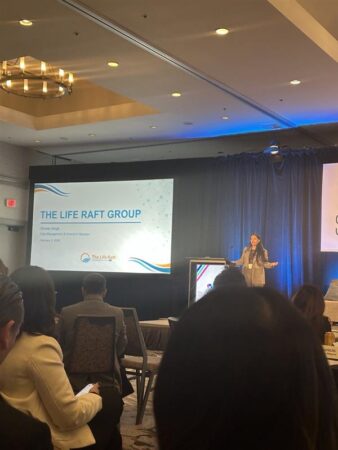
 Most days I spend my time behind a computer sending emails, curating data, or speaking with patients on the phone. Today was different. I was fortunate to be able to travel to Dallas, Texas to present on behalf of The Life Raft Group at the GSK StrateGIST3 Investigator meeting.
I spent my morning reviewing my presentation and waiting at the airport after several delays. While sitting at my gate, I struck up a conversation with an elderly couple sitting next to me. We began talking about what I do at The Life Raft Group and my role as a patient advocate. I felt an immense sense of pride sharing the work we do. The husband was intrigued and started asking questions about my background and even had GI question. He shared his concerns, and I encouraged him to get a second opinion. The work of a patient advocate truly never stops :).
The following day, the meeting began, and I learned more about the research, clinical trial process, and eligibility criteria for StrateGIST3. During my presentation, I discussed the mission of the LRG, my role as a patient advocate, and described the patient journey.
In my role at the LRG, I welcome every new member who joins, and I support GIST patients as they learn about navigating resources, patient advocacy, and clinical trial awareness. Our team has a direct connection to the patient experience, and the many challenges people face daily. Healthcare providers are essential and having a doctor that is well-versed in GIST and up-to-date on the latest research is vital to the most effective care for your GIST. However, physicians cannot be everything for every patient and that is where we help fill in the gaps.
A patient’s journey is never a straight line from initial symptoms to diagnosis to no evidence of disease (NED, which means – stable disease). I felt it was important to highlight the many obstacles a patient may face along the way that is often overlooked by their healthcare teams. Such as misdiagnosis/delayed diagnosis, finding a specialist, insurance obstacles, educational resources (misinformation is unfortunately abundant), access to medication, cultural barriers, side effect management, understanding clinical trials, and the need for emotional and community support. Every patient’s journey is different ,and it is not as linear than it may seem.
The investigators were clinical trial investigators (medical oncologists and clinical trial coordinators) in North American, including USA, Canada, and Brazil. After my presentation, several investigators approached me to learn more about LRG. Fortunately, many were already familiar with LRG and listed as specialists on our website. I was able to make new meaningful connections and also connect people at the meeting with various resources to better support their patients.