Long-Term Survival & Living Beyond the Diagnosis
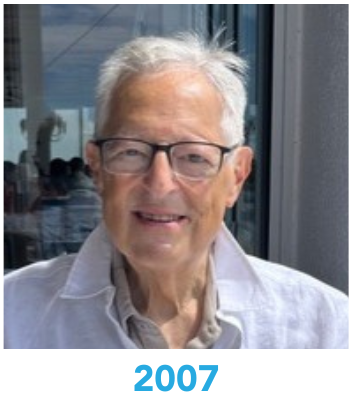 About a week prior to Father’s Day in 2007 I started feeling a little unsettled in my gut. I felt that it was a “bug” of some sort and ignored it for a couple of days. However, on the third day, as it continued, I decided to see my doctor. I only worked a half day and then went home to install a new flat screen TV and move other TVS around. The movement of lifting, twisting and bending may have saved my life.
I ate a light dinner, went to bed, and awoke around 3am needing the bathroom. In the bathroom I fainted twice. My wife and I decided to go to the local ER and made our way downstairs, where I fainted and vomited blood. The ambulance personnel arrived, loaded me on a gurney and transported me to the local ER. An IV was started and a nasal-gastric tube was inserted. Contrast CTs followed later in the day, and after the films were read, my family and I were told there was something in my stomach, with two possibilities and I needed exploratory surgery as soon as possible to determine a diagnosis and course of treatment. I was transferred to North Shore University Hospital in Manhasset, NY.
At about 7am on Father’s Day, Drs. James Sullivan (abdominal gastric oncological surgeon) together with one of his partners, Dr. Charles Conte (complex general oncological surgery) operated and removed about 20% of my stomach, all my spleen and about 5% of my pancreas (with clear margins). I didn’t know it at the time, but this was the beginning of my 19-year GIST journey.
Fortunately, at this same time the FDA had approved imatinib (Gleevec) for adjuvant GIST treatment, and within a month or so I started taking it. Since 2007 I’ve had three more GIST surgeries (I now have about a third of a stomach, and my omentum and a piece of my colon currently reside in the pathology lab at MSKCC).
I was almost 57 years old in 2007 and had no idea whether I would be able to work and earn a living and live my life with my wife and family, who have stood by my side and cared for me during my recoveries. Though my parents were eternal optimists, I am less so but am mostly an optimist. I also lived in proximity to Memorial Sloan Kettering Cancer Center, which at the time was one of five cancer centers in America working specifically on GIST. They had the knowledge, treatment and care protocols from the top doctors and their research into GIST in the lab and it was available to me.
I also had perseverance. I’ve been able to survive each challenge and move forward using all of the foregoing. Finally, imatinib had just been approved for post GIST surgery treatment, with a second line drug, sunitinib just coming on the scene to stop the GIST from receiving protein, was another factor. So, with this information, this optimist with perseverance, the support of family and proximity to a top-tier cancer center, moved forward. Each surgery was a stumbling block that tried to get in the way of my life. My doctors have given me time and the meds keep the GIST at bay and my optimism, perseverance, family support and excellent GIST specialists keep me moving forward. I would advise anyone with this diagnosis to try to find the best doctor and research hospital in your area and follow the experts’ advice while asking questions and trying to stay positive.
I learned about The Life Raft Group during the summer of 2007. Their motto at the time was “we’re all in this boat together.” Their monthly newsletters and emails provided reports and updates about current treatment and the results of advancements of GIST research, monitoring and treatment developments as well as patients’ stories of their journey and successes. It was a “Life Raft” for me as I moved forward. The Life Raft Group has been a source of information that had not otherwise been readily available.
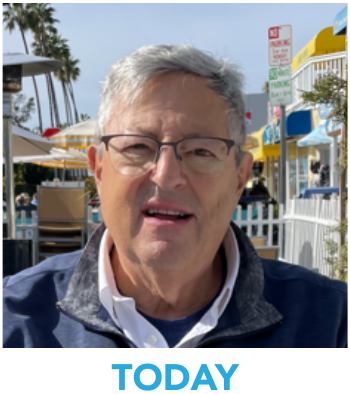 In May 2024 I needed another surgery with the result showing that my tumor developed an Exon 13 mutation over time. I now take sunitinib malate (Sutent), the second line protein inhibitor, and it seems to be doing its job. Now dealing with different side-effects than from the imatinib.
Since 2007 I been provided advice, treatment and genuine concern from all my brilliant and skillful GIST physicians (specialists in the field): Drs. William Tap (Chief of the Sarcoma Medical Oncology Service), Ronald DeMatteo (formerly my surgeon at MSKCC and now Chair of the Department of Surgery at the Perelman School of Medicine at the University of Pennsylvania) and Jonathan Trent (Associate Director for Clinical Research, Director of the Bone and Soft-Tissue Sarcoma Group, and Professor of Medicine at the Sylvester Comprehensive Cancer Center at the University of Miami). Additionally, together with the physicians and staff at Sylvester Comprehensive Cancer Center hematological, gastroenterology departments, CTU units and the staff at MSKCC, University of Pennsylvania and Sylvester Comprehensive Cancer Center at the University of Miami. These men and women have worked diligently to provide excellent medical care, and ultimately my survival, during the last 19 years.
With a bit of luck and more treatment options I hope and plan to continue living for many more years to come.