The ongoing search for better methods of disease prevention, diagnosis, and treatment is carried by clinical trials.1, 2 Gastrointestinal stromal tumors (GIST) were identified as a distinct group of sarcomas in 1998.3 Since then, research has helped doctors and scientists gain a deeper understanding of GIST, leading to more precise ways of treating this rare cancer.3,4,5 These evolved standards of care have greatly improved patient outcomes.4,6
Presently, there are many active trials for GIST, and new ideas are being explored to this day. Researchers and participants alike aim to increase available treatment options, develop better ways to address less common molecular subtypes2,5, and manage treatment resistance.7
A clinical study is defined as a research project that:
#1: involves human participants, and #2: examines a health outcome.2,8
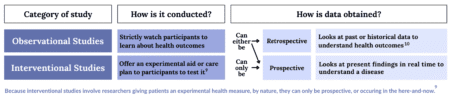
When most people think of clinical research, they picture an interventional clinical trial. In interventional studies, participants are given an experimental aid.9 This may be a new way to diagnose a disease, a prevention strategy, or an investigational treatment, such as a drug. Studying an intervention in real time helps researchers evaluate its safety and efficacy.1,9 In other words, this shows us whether the proposed aid can improve the outcome of a disease without a steep risk of unbearable or life-threatening side effects.9
Over the past two decades, clinical research has elevated the standard of care for GIST. Contemporary trials have explored combination therapies,11,12 sequencing to guide more precise treatment approaches,5,13,14 and more recently, strategies like immunotherapy, which helps the body’s own immune system better fight cancer cells.15,16
What is the clinical trial process like?
Discovery of possible treatments often starts in the laboratory. This stage is sometimes called pre-clinical development. Here, the goal is to gather evidence that the potential therapy could be effective and safe, usually by testing it in human cells or animals.2,8 This evidence is examined by regulatory or ethics groups, such as an Institutional Review Board (IRB). These groups then determine if the proposed treatment advances to a trial.8
Clinical trials represent the next series of steps: where the most promising ideas are tested for their ability to practically aid in a human health challenge.
Trials for a rare disease, such as GIST, usually have fewer participants by nature.17 This presents unique challenges: trials must generate accurate findings with a smaller sample size, while also prioritizing ethical access to experimental treatments. Alongside modern, flexible study design, rare disease trials may sometimes combine phases to accelerate the process and help retain patients.17,18 These types of trials for GIST have seamlessly moved promising treatments through stages of investigation more quickly.19 Coordinating clinicians and trial staff are able to provide more detailed information about a trial’s specific design and the advantages and considerations that come with it.
As a treatment progresses through each stage of a clinical trial, participant safety remains a priority. Researchers must submit a plan, formally called a protocol, that outlines the intended treatment, safety measures, and other parts of the trial’s design. Additionally, ongoing oversight reduces unnecessary risk to patients and volunteers. This supervision also helps make sure that the study’s findings are accurate and based in sound medical science.2,8
Is a clinical trial a good option for me?
A common misconception is that clinical trials are only recommended to patients who have gone through all other options. However, it is important for all GIST patients to explore all treatment options, including clinical trials, before deciding on a treatment path. Exploring these options gives patients several benefits:
- Access to the latest treatment options. Clinical trials may provide access to promising new therapies that are not yet widely available and could offer benefits beyond current standard treatments.
- More informed decision-making. Reviewing all available options, including approved treatments, surgery, watchful waiting, and clinical trials, helps patients understand the potential risks, benefits, and goals of each approach so they can choose the path most aligned with their needs.
- Keep future opportunities open. Some clinical trials have specific eligibility requirements, and certain treatments or procedures may make patients ineligible for a trial later. Reviewing clinical trial options early can help ensure you understand how today’s treatment decisions may impact future opportunities.
Lastly, many participants express the desire to join a clinical trial to take part in improving our collective understanding of a disease.
Clinical research participation also comes with some considerations. While there are serious measures in place to safeguard participant wellbeing, participation can involve some risk. Experimental treatments may cause side effects or, in rare cases, life-threatening complications.2
Trials may also demand a greater time commitment from participants compared to standard treatments. Logistic factors such as rigid medication schedules, appointment frequency, and distance from a research center can all be real barriers.20 The educational and informed consent documents given to participants are designed to address these possibilities and help patients make the best decision for their unique situation. Trial coordinators can provide information about study goals, safety, duration, and more.
For a first-hand point of view of these considerations, The Life Raft Group hosted a recent webinar featuring patient and clinician perspectives on the trial process.
Where can I learn more about getting started?
Patients are encouraged to seek ongoing education about clinical trials and to check regularly for updates. New trials begin enrolling regularly, and just because there may not be a trial that’s a great fit for a patient now, that doesn’t mean a better option won’t become available in the following months.20
If a patient does not qualify for an active clinical trial, but wishes to explore alternative treatments, expanded access programs (EAPs) can be another option.21
As the name suggests, EAPs exist to increase access to medical interventions, offering experimental treatments to a wider group of patients with immediate need.21 They are suggested when a patient is in serious condition, is unable to participate in a relevant clinical trial, and has gone through all other approved, or standard, treatments. Still, these programs must protect participant safety, and they are strictly offered when the benefit of the experimental aid is expected to outweigh the risks. It is also important to consider that an expanded access option may not necessarily be available for every investigational treatment that is actively being tested in an ongoing trial.21
There are online resources available to patients and loved ones, designed to streamline the process and connect participants with the active trials most relevant to them. The GIST Clinical Trials Database is a free, curated list of opportunities. Lastly, connecting with a GIST specialist is a great way to learn more about trials that might be a good fit.
Having up-to-date information is the first step to considering a clinical trial. The Life Raft Group is able to provide resources, answer questions, and connect patients to a specialist who can help.
WATCH NOW: Dr. Rashmi Chugh from the University of Michigan Health Rogel Comprehensive Cancer Center presented on how clinical trials work, who they are for, and what patients can really expect, plus, Dirk Niggemeyer, a GIST patient, shared his personal journey navigating two clinical trials.
References
-
Kim S. Overview of Clinical Study design. Clinical and Experimental Emergency Medicine. 2023;11(1). doi:https://doi.org/10.15441/ceem.23.036
-
National Institutes of Health. The Basics. National Institutes of Health (NIH). Published October 3, 2022. https://www.nih.gov/health-information/nih-clinical-research-trials-you/basics
-
Blay JY, Le Cesne A, Cassier PA, Ray-Coquard IL. Gastrointestinal stromal tumors (GIST): a rare entity, a tumor model for personalized therapy, and yet ten different molecular subtypes. Discovery medicine. 2012;13(72):357-367.https://pubmed.ncbi.nlm.nih.gov/22642917/
-
Jones RL, Golčić M. Recent advances in the systemic treatment of gastrointestinal stromal tumors. Cancer Biology & Medicine. Published online October 20, 2023:1-5. doi:https://doi.org/10.20892/j.issn.2095-3941.2023.0302
-
Baranda JC, Godwin AK. Advancing the promises of precision medicine for patients with gastrointestinal stromal tumor. Gastrointestinal Stromal Tumor. 2019;2:4-4. doi:https://doi.org/10.21037/gist.2019.10.01
-
Klug LR, Khosroyani HM, Kent JD, Heinrich MC. New treatment strategies for advanced-stage gastrointestinal stromal tumours. Nature Reviews Clinical Oncology. Published online February 25, 2022:1-14. doi:https://doi.org/10.1038/s41571-022-00606-4
-
Belančić A, Prejac J, Golčić M, Adžić G, Katić A, Kocić L, Kovač Peić A, Librenjak N, Belev B, Mikolašević I, et al. Targeting the Unmet Need in Gastrointestinal Stromal Tumors: A Contemporary Review of Investigational Clinical Trials and Therapeutic Landscape. Pharmaceuticals. 2026; 19(4):548. https://doi.org/10.3390/ph19040548
-
42 CFR § 11.10. Accessed May 28, 2026. https://www.ecfr.gov/current/title-42/chapter-I/subchapter-A/part-11/subpart-A/section-11.10
-
Aggarwal R, Ranganathan P. Study designs: Part 4 – Interventional Studies. Perspectives in Clinical Research. 2019;10(3):137. doi:https://doi.org/10.4103/picr.picr_91_19
-
De Sanctis V, Soliman AT, Daar S, Tzoulis P, Fiscina B, Kattamis C. Retrospective Observational studies: Lights and Shadows for Medical Writers. Acta bio-medica : Atenei Parmensis. 2022;93(5):e2022319. doi:https://doi.org/10.23750/abm.v93i5.13179
-
Cogent Biosciences Announces Detailed Clinical Data from PEAK Phase 3 Trial with Bezuclastinib in Combination with Sunitinib in Gastrointestinal Stromal Tumors (GIST) at 2026 American Society of Clinical Oncology (ASCO) Annual Meeting. Cogent Biosciences. Accessed June 10, 2026. https://investors.cogentbio.com/news-releases/news-release-details/cogent-biosciences-announces-detailed-clinical-data-peak-phase-3
-
A Study of Ziftomenib in Combination With Imatinib in Patients With Advanced Gastrointestinal Stromal Tumors (GIST). gov identifier: NCT06655246. Updated February 5 2026. Accessed June 10 2026. https://clinicaltrials.gov/study/NCT06655246
-
Wahner A. Innovative Research Continues to Propel Individualized GIST Treatments. OncLive® 2024. Accessed June 11 2026. https://www.onclive.com/view/innovative-research-continues-to-propel-individualized-gist-treatments
-
Joensuu H. Selection between sunitinib and ripretinib using mutation analysis for gastrointestinal stromal tumor patients progressing on imatinib. Translational Gastroenterology and Hepatology. 2024;9:52-52. doi:https://doi.org/10.21037/tgh-24-32
-
Current Trials | GIST Support International. Gistsupport.org. Published 2017. Accessed June 14, 2026. https://www.gistsupport.org/treatments/clinical-trials-for-gist-cancer/current-trials/
-
Schuetze SM. Dawn of immunotherapy treatment for gastrointestinal stromal tumors. Gastrointestinal Stromal Tumor. 2021;0. doi:https://doi.org/10.21037/gist-22-4
-
Bell SA, Tudur Smith C. A comparison of interventional clinical trials in rare versus non-rare diseases: an analysis of ClinicalTrials.gov. Orphanet Journal of Rare Diseases. 2014;9(1). doi:https://doi.org/10.1186/s13023-014-0170-0
-
Pizzamiglio C, Vernon HJ, Hanna MG, Pitceathly RDS. Designing clinical trials for rare diseases: unique challenges and opportunities. Nature Reviews Methods Primers. 2022;2(1). doi:https://doi.org/10.1038/s43586-022-00100-2
-
Jiang L, Yuan Y. Seamless phase II/III design: a useful strategy to reduce the sample size for dose optimization. Journal of the National Cancer Institute. 2023;115(9):1092-1098. doi:https://doi.org/10.1093/jnci/djad103
-
Chugh R, Niggemeyer D. Taking the Leap: What It Means to Join a Clinical Trial. The Life Raft Group webinar. May 21, 2026. Accessed May 22, 2026. https://liferaftgroup.org/event/what-it-means-to-join-a-clinical-trial/
-
S. Food and Drug Administration. Expanded access. U.S. Food and Drug Administration. Published 2019. https://www.fda.gov/news-events/public-health-focus/expanded-access