In our monthly patient and caregiver stories, we share our community’s stories because each GIST journey matters. Your experiences as a rare disease patient or caregiver create a tapestry of strength, resilience, and shared understanding. By sharing, you not only break the chains of isolation but become a beacon of hope for others facing similar challenges. Together, these collective narratives shape a powerful force that drives awareness, research, and advocacy. Your voice matters, and by sharing your story, you contribute to building a stronger, more connected, and empowered rare disease community. Help others realize that even though they battle a rare disease & that each GIST case is unique, they are not alone.

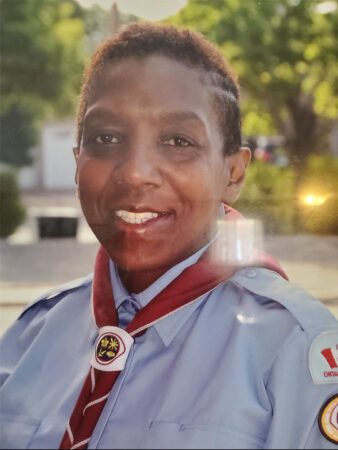
Our Patient of the Month for August is Betty Owen.
 My GISTory
I am persuaded to share my story with this incredible community. I recently found out about The Life Raft Group, and it is extremely comforting to know there is such a wonderful group of people out there fighting for us, encouraging us and pushing for better treatments and a cure.
My journey spans 11 long years of monumental ups and downs. It would take a lifetime to type every single detail, but I hope my path can offer some encouragement to anyone out there fighting today-whether you were diagnosed yesterday or have been on this road for a long time
My story began in December 2014 with persistent stomach discomfort and a constant feeling of being full. A barium swallow ordered by my GP revealed a growth, and a subsequent gastroscopy confirmed a tumour. At that stage, we couldn’t have known the exact diagnosis until it was removed and tested.
In February 2015, I underwent surgery to remove the tumour. A few days later, pathology confirmed it was a malignant GIST. Hearing that diagnosis was extremely heavy but my faith in God allowed me to remain calm and positive. I was also blessed with an amazing network of family and friends, so I never felt alone.
To prevent recurrence, I was started on Gleevec (imatinib). Within a few weeks, severe side effects hit: intense nausea and painful sores on my tongue. I also suffered a Transient ischemic Attack (TIA). My doctor didn’t think the TIA was related to the drug. However, about two weeks later, I suffered a second TIA and ended up in the ER again. That prompted my Oncologist to realize that Gleevec was the culprit, and I was taken off it immediately. Because my surgeon had done a complete resection, Gleevec was strictly a precaution. I was told that if there was no recurrence after two years, I would be considered cured.
I held on to that hope until my follow-up scan in 2017. The devastating news came that the GIST has returned with metastasis. I couldn’t believe my ears and thinking of what would happen next was overwhelming.
My team moved me to the second line therapy drug: Sutent (sunitinib). While it started smoothly, I suddenly developed excruciating abdominal pain that got worse throughout the day. I ended up in the ER and was hospitalized with ischemic colitis. For the next year, my life was a cycle of hospital stays. I was admitted one week out of every month for 10 months out of the year. Each time, my doctors reduced the dose, until it was manageable enough to keep me out of the hospital. At this time, I was also advised to take medical leave of my administrative post at the hospital. The lower dose carried tolerable side effects and successfully shrunk the tumour. At this time, I was able to resume some of the things I enjoyed doing like running track, being involved in my women’s group, being a counselor in the Adventurers’ Club, signing, singing in the Choir and helping others who needed assistance. Within the last two years I have joined a Seniors’ group, a Book Club, and taken a Self-Empowerment course.

By 2019, the Sutent stopped working and the disease progressed, this time affecting my liver. I was started on Stivarga (regorafenib) and told by my local team that surgery was no longer an option. After asking many questions, I was referred to a GIST specialist. The specialist looked at my case differently and made it possible for me to undergo surgery again. This time it was a liver resection. I have survived more surgeries over the years. I stayed on Stivarga after surgery until that too lost its effectiveness. Currently, I am on Qinlock (ripretinib).
How I cope with GIST
Like all the other medications, it comes with its own distinct side effects, mainly extreme tiredness and a sore tongue but I am managing day by day. Looking back over more than a decade, I am filled with gratitude to God, my family and friends who continue to walk with me every step of this difficult road.
My #GISTLife Motto
To anyone on this forum who is in the thick of the battle right now, please do not give up. This disease tests us in ways we never thought possible, but we are stronger than we know. Keep on fighting!
Learn more about the LRG Patient Registry!
If you want to be our LRG Patient of the Month or Caregiver of the Month, please see the criteria below.
Criteria for Patient of the Month
- Patient must be a member of the LRG GIST Patient Registry
- Patient is an active member of the Patient Registry, continually providing medical updates
- Patient’s record should be at least 80% up-to-date
- Patient has GIST Patient Registry Online
- Patient must agree to provide consent to share his/her story to our GIST community on our website and social media
Criteria for Caregiver of the Month
Caregivers are an important team of family and friends. They allow a patient to depend on them for support through their difficult journey as well as help with various tasks such as cooking, housekeeping, transportation and so much more. In conjunction with Life Raft Group’s Patient of the Month, we are showcasing Caregivers of the Month. We want to hear stories of the selfless supporters that stand beside our GIST warriors.
Interested? Contact our Data Mgmt. & Research Team, for more information: patientregistrydepartment@liferaftgroup.org