
The Life Raft Group is committed to enhancing the survival and quality of life for people living with Gastrointestinal Stromal Tumor (GIST), and other rare diseases, through patient-powered research, education and empowerment, and global advocacy efforts.
Other Programs Supported by The Life Raft Group:



PATIENT
Leverage patient perspective to drive innovative solutions in cancer research.

POWERED
Educate and empower patients to take a larger role in their care.

SCIENCE
Accelerate research outcomes through collaborative efforts.

FOR LIFE
Increase access to effective treatments worldwide.
Real World Evidence In Action
Traditional models for cancer research have resulted in many breakthrough treatments for patients, but it is not enough. The LRG’s approach to GIST research through real world evidence, relies on timely, accurate data from the patient’s perspective, with patient survival as the primary objective.



RECENT LRG DATA



Did you know that GIST is actually a family of cancers? Learn more about the science of GIST.

Update your Patient Registry Info.
Join The Life Raft Group.
Current GIST Clinical Trials.
Search the GIST Specialist Database.

Dr. Monica Anderson
Diagnosed in 2012 with Adult GIST.

Bella Rocco
Diagnosed in 2009 with Pediatric
(SDH-deficient) GIST.
HELP US SAVE LIVES
The Life Raft Group is a community and it is up to all of us to make a difference. There are many ways to help. We always need patient tissue and data in our GIST patient registry. Volunteering your time or making a monetary donation also helps us drive research forward and save lives.

News

NIH Pediatric & Wildtype clinic continues with success
The fourth bi-annual NIH Pediatric & Wildtype GIST Clinic at the National Institutes of Health on January 20 was, once again, a [...]
Synta opens phase II trial STA-9090 in GIST
STA-9090 is a synthetic, small molecule HSP90 inhibitor. It has a unique chemical structure different from earlier HSP-90 inhibitors that, like IPI-504, are first generation drugs based on a family of antibiotics called ansamycins. As a result, STA-9090 is likely to have a different toxicity profile.
February 2010 clinical trials update
Written by Jim Hughes Updated five year adjuvant Gleevec trial: Phase II now open at 21 sites in the United States. NCT00867113 Updated MP470 [...]

More Life Fest 2010 Updates!
Here, you can register for Life Fest, view pictures, video and presentations from past Life Fests, download a nomination form for GIST Clinician of the Year and download materials for our new project: Tree of Life.

From bench to bedside and back again
GIST is a great example of how science can impact outcomes in cancer patients. As a malignancy, GIST has fewer changes in its genes than many other cancers. Thus, the discovery by Hirota and colleagues in 1998 that GIST contained mutations in the KIT gene was a breakthrough for the treatment of GIST. Tyrosine kinase inhibitors such as imatinib and sunitinib that target KIT, as well as PDGFRA, have significantly improved the outcomes for patients with GIST. Clinicians at the bedside of their patients have seen the impact of these drugs and have also had to face the challenges of what to do when therapy doesn’t work. How might we do better?

Life Fest 2010: Celebrating a Decade of Life
Life Fest 2010: Celebrating a decade of life. It has been a remarkable decade for the GIST community as scientific discovery, medical treatment and drug development have put GIST
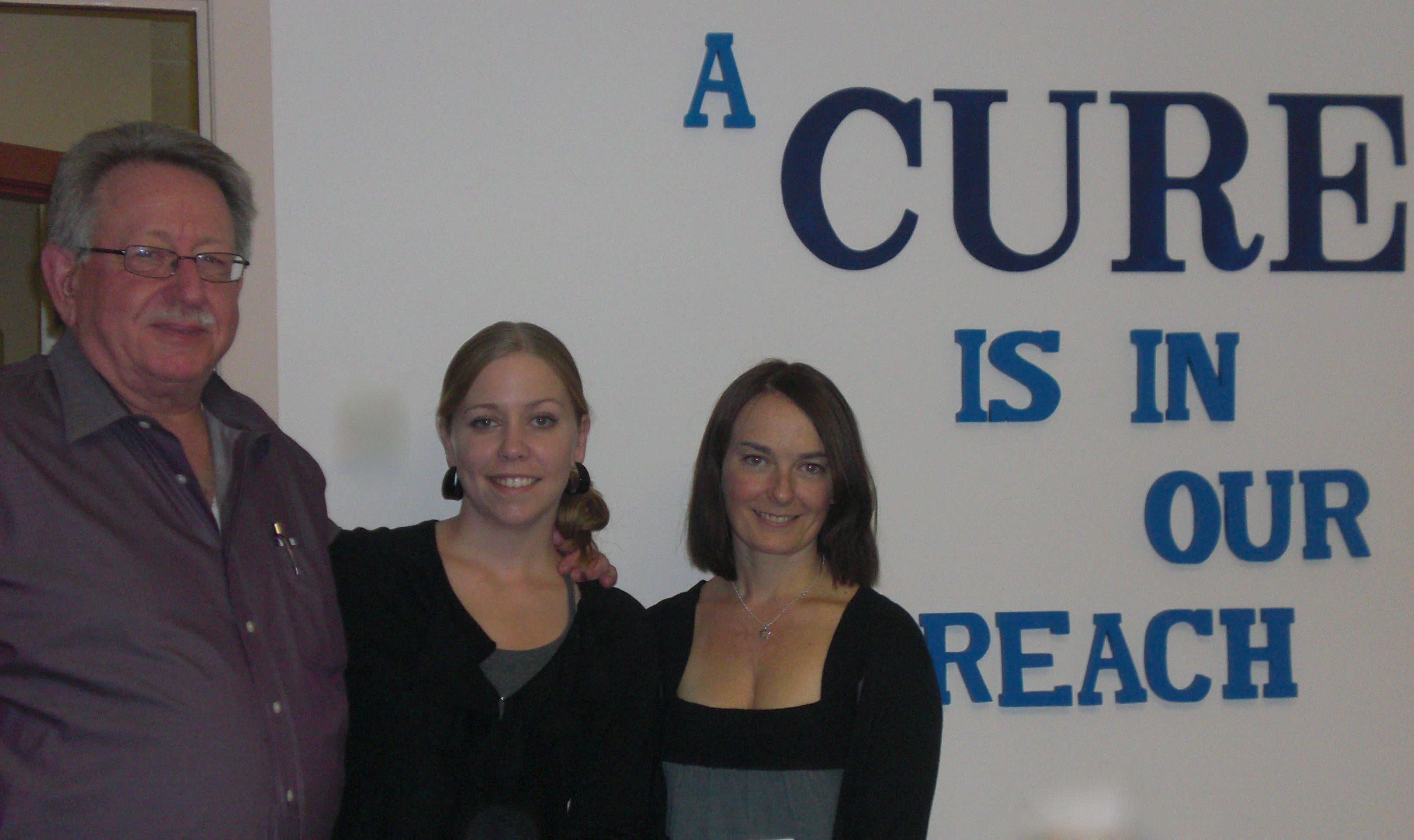
Cross-continental fun at the LRG office!
There has been some cross-continental fun as of late at the LRG Office. Estelle Lecointe, French cancer advocacy poster girl, founder of Ensemble [...]
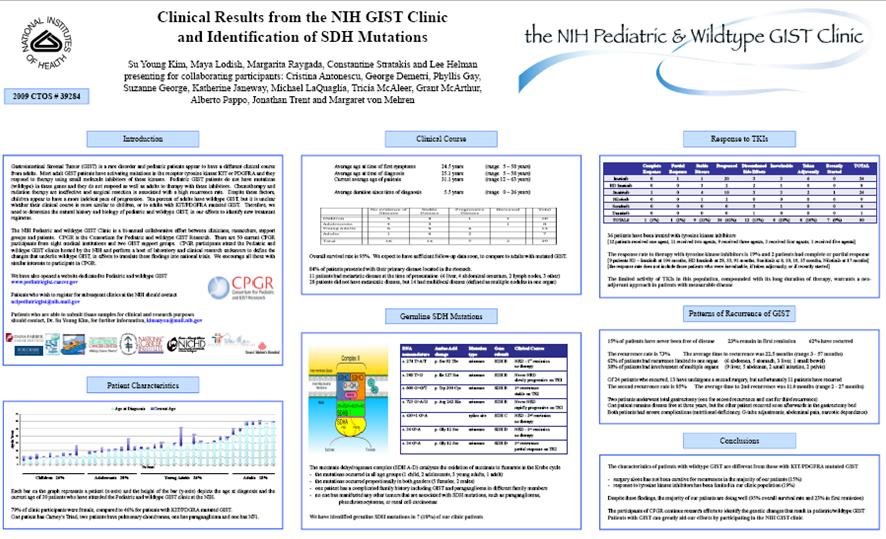
LRG in the News: Poster & Abstracts, oh my!
The LRG keeps popping up in the science community. Recently, the National Institutes of Health (NIH) as part of the Consortium for [...]
Keep up with the latest news, events, and opportunities to help.
To contact The Life Raft Group, please call 973-837-9092
PARTNERS & AFFILIATIONS