 Every time we hold a Life Fest meeting, I say, “This is the best Life Fest we’ve ever had.” This time, I really, really mean it.
There was something different about this year’s gathering. Maybe it was the energy in the room. Maybe it was the way patients, loved ones, and physicians moved so naturally between conversations. Or maybe it was the feeling that, for one weekend, we weren’t just talking about what it means to navigate a rare disease—we were navigating it together.
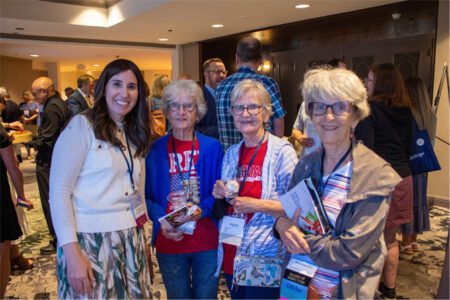
Friday evening set the tone. I had the chance to greet old friends and welcome new faces, and it was wonderful to see physicians mingling with patients in such a relaxed, social setting. These moments matter. They break down the distance that can sometimes exist between the person sitting in the exam room and the person sitting across the desk.
During Saturday morning’s kickoff, our Board Chair, Gary Glasser, offered an analogy that stayed with me. Inspired by the FIFA World Cup and the power of the Norway fans rowing together in unison, that is The Life Raft Group. We are all in the same life raft, and we move forward when we row together.
It isn’t just patients and their loved ones who are in that raft.
If you had the opportunity to engage with a sarcoma expert (and I hope all of you reading this have), you know that many of these physicians bring an extraordinary level of passion and commitment to this community. They don’t simply treat GIST or sarcoma. They care deeply about the people living with these diseases. They want to understand what patients are experiencing, what they need, and where the system is falling short.
They want to row with us.
You could feel that throughout the weekend. During the Q&A sessions, one patient would ask a question, one physician would respond, and another would build on that answer. The conversation became bigger than any one person or specialty. It was a powerful reminder of why communication and multidisciplinary care matter so much in rare disease. No single person has every answer. But when we bring the right people together, we can get much closer to finding them.
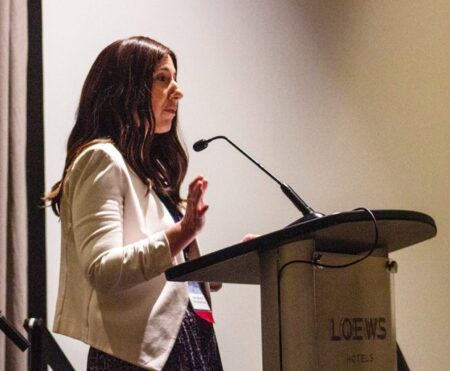 We also heard about new and promising treatments on the horizon. That matters. For a community that has spent decades fighting for more options, scientific progress is more than an abstract concept—it is possibility. It means there are new paths forward, new questions to ask, and, increasingly, more choices to consider.
Life Fest is not only about treatments.
Patients spoke honestly about the importance of communication with their care teams, the stress of managing a chronic and often unpredictable disease, and the toll that cancer can take not only on patients but on the people who love them. Those conversations are just as important as the scientific ones. A treatment plan exists in the context of a person’s life. We cannot separate the disease from the human being living with it.
Several physicians told us they had never attended a meeting quite like Life Fest and that the conversations with patients stayed with them, not just as physicians, but on a deeply human level.
That is exactly why we do this.
The Life Raft Group’s role in this community is unique. We bring people together who may otherwise never have the opportunity to sit in the same room—to connect patients and loved ones with the clinicians and researchers who are working to change the future of these diseases. We create a place where questions can be asked openly, experiences can be shared honestly, and knowledge can move in both directions.
To everyone who attended: thank you for showing up, asking questions, sharing your experiences, and helping move this community forward.
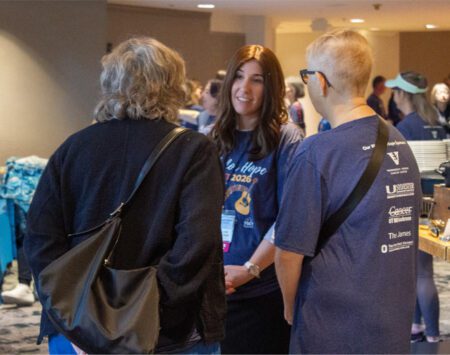 To those who were on the fence about attending in person, I encourage you to watch the recordings. You will learn a lot. I also want to say this: you will not get everything from a video.
There is something intangible about being in that room. It is the hug from someone who understands without needing an explanation. It is the physician who stays after a session to answer one more question. It is hearing another patient say something you thought only you were experiencing. It is the energy that builds when hundreds of people who understand the weight of this disease come together and realize they are not carrying it alone.
You can watch a presentation later. You can read the slides. You can catch up on the science.
But you cannot replicate that feeling.
Life Fest reminds us that we are not rowing alone. And when we row together—with patients, loved ones, and physicians pulling in the same direction—we can move this community somewhere new.
That is The Life Raft Group’s role: to bring the right people into the raft, give them the tools and information to keep moving forward, and make sure no one has to row alone.